Clothes
Animal FarmClothes figured in the revolution from its first principles. Old Major, in his speech to the gathered animals, had laid down the commandment: 'No animal must ever … wear clothes.' Clothes were a human habit, a mark of the tyranny from which the animals sought to free themselves. On the night of the Rebellion, the animals celebrated by destroying every trace of human rule. They flung into the fire the bits, the nose-rings, the dog-chains, the whips—and Snowball deliberately threw on the ribbons that had decorated the horses' manes and tails on market days, declaring, 'Ribbons … should be considered as clothes, which are the mark of a human being. All animals should go naked.' For a time, the prohibition held.
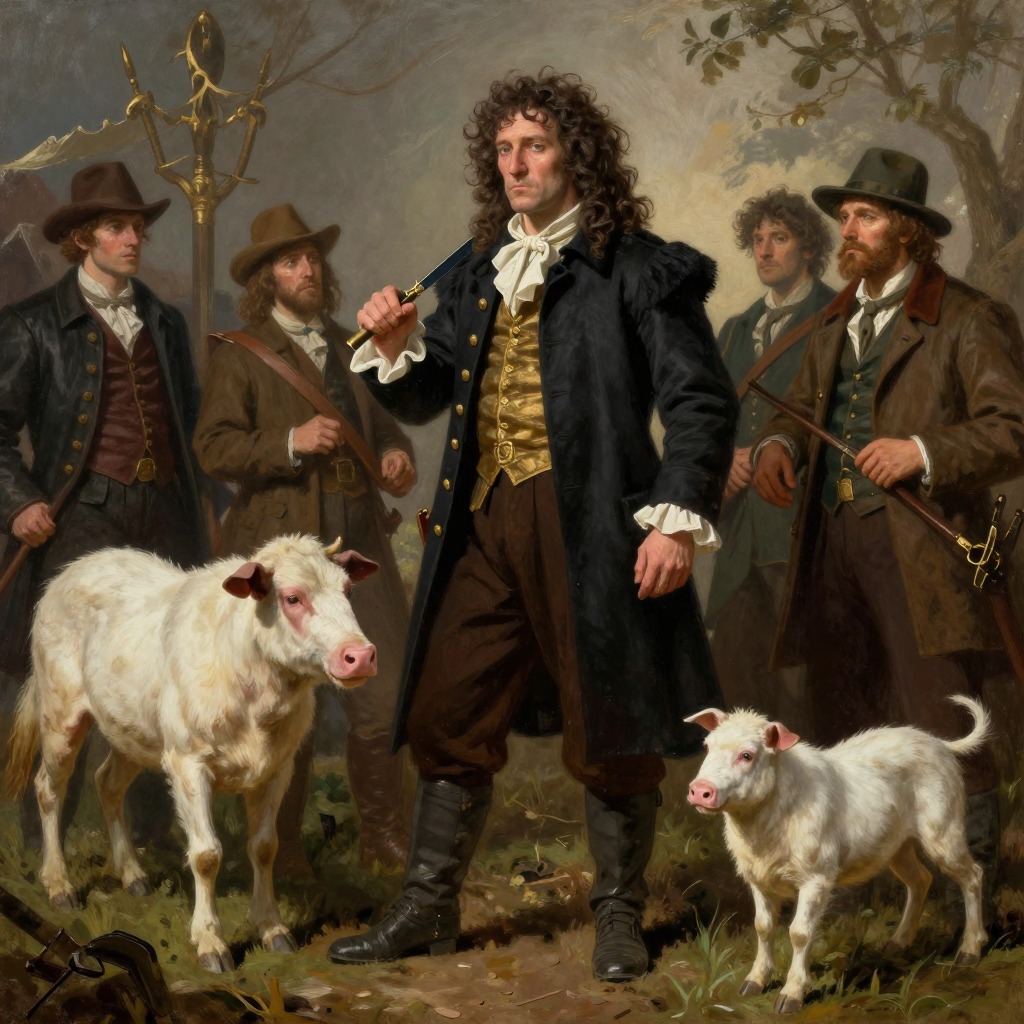
The prohibition, however, did not survive the pigs' consolidation of power. As the pigs assumed the role of brainworkers and the farm's sole directors, they began to adopt the very human privileges they had renounced. Squealer was the first to be seen walking on his hind legs, a little awkwardly but with perfect balance, and then a long file of pigs followed, Napoleon himself appearing last, majestically upright. The final, overt violation of the clothes prohibition came when the pigs took Mr. Jones's clothes from the wardrobes and put them on. Napoleon appeared in a black coat, ratcatcher breeches, and leather leggings; his favourite sow wore the watered silk dress that Mrs. Jones had been used to wear on Sundays. The pigs supervising the farm now carried whips in their trotters. The visual markers of human domination—the clothes, the whip, the upright posture—had been fully reappropriated.
The transformation was complete when the animals could no longer distinguish pig from human. At a banquet for neighbouring farmers, Napoleon and Mr. Pilkington played cards and drank together, and when a quarrel broke out, the twelve voices that shouted in anger were all alike. The creatures outside looked from pig to man, and from man to pig, and from pig to man again, but it was impossible to say which was which. The clothes had done more than merely cover the pigs' bodies—they had erased the boundary between oppressor and oppressed, fulfilling the very outcome Old Major had warned against: the animals had come to resemble the humans they overthrew.